Crafting a successful business case does not need to be a daunting task or something to be feared. In fact, it can be a fun, informative, and rewarding project. It simply requires you to do a little homework, explain your current AP processes and costs, discuss the opportunities for change and engage with the key stakeholders who can benefit from the overall project.
Automating accounts payable is the best way for finance teams to create value in the form of improved efficiency, security, and revenue. To get there, you need an approved budget for AP transformation. To get there, you need to create a compelling business case, one that lays out the opportunity in a clear and convincing way for executive leadership. This how-to guide will help you structure and write that winning business case. With our help, your AP automation project will hopefully be approved and launched quickly. Just use this guide’s seven sections to tailor your case to your team, requirements, and situation.
Section 1
Executive Summary Checklist:
- Will the reader get a clear understanding of the reasons for the project and its outcome?
- Is the Executive Summary less than two pages?
- Can the Executive Summary be treated as a stand-alone document?
Executive Summary
The Executive Summary should provide an overview of the key points of the business case document and outline the purpose of the AP transformation project. The section should contain enough information for the reader to become familiar with the subject and summarizes the issues being addressed by the project, what benefits it will provide, and how it aligns with the goals and objectives of the organization. Be sure to include the ROI and any financial calculations like cashflow impact, Net Present Value, etc.
Avoid overly technical language that the casual reader may not understand. Bottomline recommends writing the Executive Summary section after all the other sections have been written.
Section 2
Background Checklist:
- Will the reader get a clear understanding of the AP function and its roles and responsibilities?
- Describe the number of employees and organizational and reporting structure of the AP department?
- Provide information on the number of invoices, payments, and inquiries handled annually.
Background
The reason for writing this section is to provide the reader with an introduction to the AP department and clearly explain the general business problems that it faces due to a lack of automated processes. Provide an overview of the department size, scope and responsibilities taking care to underscore the importance of timely and accurate processing of invoices, payments, and any additional responsibilities.
Also remember to include where AP fits in the organization, who has operational responsibility for the department, and the executive with the ultimate oversight of the AP department. Do not assume that the reader knows and understands all the tasks and responsibilities that AP performs, as there is a good chance they do not.
Section 3
Problem and Opportunity Checklist:
What are the main problems AP is facing? Sample challenges might include:
- High processing costs
- Lengthy processing times
- Lost early payment discounts
- Late payments and late payment fees
- Not earning cash-back rebates on AP spend
- Exceptions and errors
- Risk of payment fraud and security breach
- Lack of visibility and control
- Inability to work remotely
The Problem and Opportunity
This section should briefly describe the main business problems that the proposed project will address. Start by explaining why the current pain points that challenge AP demand a change and depict the desired solution along with the positive impact it will provide to the organization. The section is a great way to introduce the project to key stakeholders.
The proposed solution will be detailed in the next section of the business case, so limit this section to only describing the problem. The AP department is often one of the final groups in a given enterprise to entirely abandon manual processes, which can be more costly and take significantly more time than is necessary. That plus a lack of visibility and security in those processes makes for a compelling case for change.
Section 4
Current State Checklist:
- Will the reader get a clear understanding of challenges and problems being faced due to the current process?
- Does the reader get a clear understanding of how the current process is conducted?
- Will the reader understand the tangible and intangible costs associated with the current processes?
Current State
Use this section to describe the AP department’s current processes as clearly and succinctly as possible by summarizing the results from your Readiness Checklist. Include a write up that offers the right balance of process description and summary information. If possible, include a visual workflow of the current AP process.
The goal of this phase is to quickly assess the current state of AP operations and available resources including the people, processes, and technology currently in place. Understanding the current process for receiving, processing and paying invoices is critical if the organization is going to make improvements. Defining the current process will allow the organization to uncover specific pain points, which in turn will help to refine automation requirements.
Remember, the problems discussed above are the result of an inefficient process, and can include downstream impacts like lost early payment discounts and accumulating late fees. Therefore, identifying the organization’s pain points within the current process is very important to finding the appropriate solution and making a strong case for it.
Section 5
Project Overview Checklist:
- Will the reader get a clear understanding of the proposed solution and what processes will be automated?
- Is there a detailed description of the potential business benefits of implementing this solution and are the benefits quantified?
- Is there an explanation of the potential organizational impact as a result of implementing this solution?
- Will the reader have an understanding of the implementation process and timeline?
- Will the reader understand the various risks involved?
- Is there a clear description of all the alternatives that were considered?
Project Overview (i.e. Your Proposed Solution)
Project Overview (i.e. Your Proposed Solution) This section should outline your proposed solution and its scope, including what it will do, how it works and a list of major capabilities that the team would like to deploy. There should also be a mention of the project’s scope, detailing whether it is an enterprise-level deployment or specific to certain business units or regions.
If the organization is going to take a phased approach, ideally the entire project is introduced here. That said, it will be wise to seek counsel with influencers and stakeholders who are sympathetic to AP’s plight within the enterprise to determine the best presentation strategy and what should be the scope or focus of the business case.
Below are nine key areas to include when creating the project overview:
1. Business Benefits
Identify and quantify, where possible, the business benefits of the proposed solution. Benefits are likely to be in the form of cost savings, process efficiencies, visibility and improved capabilities for managing the invoice-to-pay process. Here are a few primary opportunities that can be realized by an investment in the right AP Automation solution:
- Reduced processing costs and times
- Improved financial management
- Reduced errors and discrepancies
- Improved visibility and better alignment and engagement across teams
- Improved customer service
2. Organizational Impact
Describe how the proposed solution will impact business, IT, processes and people. Keep in mind that this project will involve a significant amount of change management and the impact to the organization in these areas should not be underestimated because the acceptance of these changes will determine the success of the project.
3. Business Impact
Describe the overall scope of deployment – for example, whether it is a regional or global project – as well as the potential business units that will be impacted by having to adopt this new solution. In some cases, it may make sense to start with a pilot and then roll out the system to the entire company. The idea is to help the reader understand how the solution will impact business operations.
4. Stakeholder Impact
Address how the new solution will affect AP-related activities for stakeholders through the prism of benefits gained. Underscore the improved efficiency and visibility, among other benefits, to effectively make the case to these stakeholders.
5. Process Impact
Explain how the new solution will impact current AP processes and ensure that an invoice is properly processed and paid. The section should include any sub-processes that might be impacted. Keep in mind there are many different approaches to AP Automation on the market, and you should have a handful of potential solutions in mind to better be able to explain potential process impact.
6. IT Impact
Describe the actual deployment of the solution, how it will be supported and what, if any, integrations to current systems (e.g., ERP, Financial, eProcurement, etc.) will be required.
7. Deployment Plan
Include a high-level technology deployment plan. Make sure to include each major phase and key milestones in the project timeline with required deliverables and current target dates. While deployment plans are not required in every business case, they are useful and help the reviewers and the project team understand the resource and timing requirements associated with this project. Solution providers should be able to provide a baseline project plan for the deployment of their solution and those like it.
8. Project Risks
Every project, technology or otherwise, involves some level of risk that cannot be eliminated completely. Therefore, work to identify all major risks and think through the best ways to minimize their impact. Be honest about the potential risks, but put them within the proper context by comparing them to the risk of inaction.
9. Alternatives Analysis
Since a business case typically proposes a single solution, it is important to demonstrate that different alternatives were considered by the project team. Include a brief summary of the alternatives that were considered and the primary reasons they were not selected. reasons they were not selected. Make sure to include an honest reckoning of sticking with the status quo.
Section 6
Financial Analysis Checklist:
- Will the reader clearly understand the financial costs and benefits involved with implementing this solution?
- Are the underlying costs and benefits assumptions clearly explained and as accurate as possible?
- Is there a detailed Return on Investment (ROI) analysis? What is the payback period?
- Is the cost of the investment clearly detailed and explained?
- Are the assumed benefits and savings clear and valid?
- Does the reader get an understanding of the assumptions made in the ROI calculation?
Financial Analysis
One of the most important aspects of any business case is the financial analysis that supports it. The analysis typically includes a cost-benefit analysis and a Return on Investment (ROI) calculation. With a cost-benefit analysis the purpose is to define the costs of the project and compare them to the benefits and savings to determine if the project is worth pursuing. The ROI analysis is used to measure and evaluate the efficiency of an investment and should clearly list the key assumptions for the proposed project and the financial analysis used to support it.
When preparing cost-benefit and ROI analyses, both business and technical assumptions should be included. Consider also including the financial metrics commonly used at your company such as operating free cashflow analysis, Net Present Value, and anything else that might help stakeholders better understand the potential impact.
Section 7
Conclusion Checklist:
- Does the reader understand the challenges and risks with current AP processes?
- Are the benefits and value that can be achieved by automating AP clearly articulated?
- Has the business case overall provided critical information that key decision-makers need to make an informed decision why the project is a worthwhile use of time, money and resources and should be pursued.
Conclusion
The conclusion of your business case should be compelling and should address the goals and objectives, problems and the opportunities that are described throughout this document. Enlist the most persuasive writer on your team to write this, as it needs to land to ensure decision-makers leave your business case with a call to action.
Briefly restate to the reader that the benefits of the proposed AP Automation solution put forth in the business case will drive much needed improvements and capabilities within AP and across many parts of the larger enterprise, including finance, procurement and treasury. Make sure to conclude this section and the business case overall with a strong, positive closing statement that the initiative is much needed and good for the company

A Few Important Tips
Before creating your business case, it is critical to first determine which stakeholders should be involved in the decision-making process and why their input is important and valued. Don’t forget to include other key stakeholders (i.e. procurement, finance, treasury, IT, line of business, and suppliers) in the process as they represent other functions or groups that are going to be impacted by the project, as well as benefit from it. If you are unsure who to involve, you might want to conduct an internal survey to identify key project constituents.
In our experience, those projects with broad-based support are more likely to be approved, and gaining strong allies can be the difference between a “go” or “no go” decision on the project. We have also learned that the best and most successful business cases, communicate information clearly and convincingly, include input that is gathered and incorporated from other stakeholders and have broad-based support from across the organization.
We also recommend you create a checklist for each section of the business case. This will help keep you on track and ensure that key aspects of the business case have been properly highlighted and that it is a comprehensive document and nothing gets missed.
And finally, you know your organization best. We’ve provided guidelines and advice based on our experience, but make sure to tailor and structure your business case to best suit the needs and requirements of your organization.
Now What?
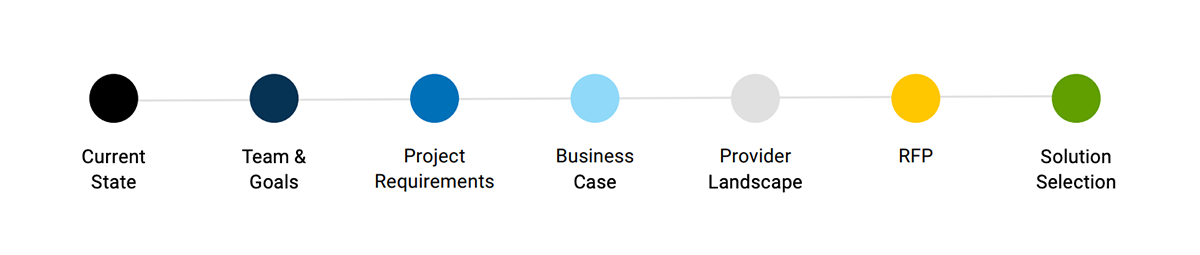
While selecting the right solution for your AP automation initiative is very important, it does not have to be difficult or complicated. Simply follow the seven phases in the AP Automation Buyers’ Guide for tips and advice on throughout your buying process.
The 7 Phases from the AP Automation Buyers’ Guide
Remember, the business case phase of the buying cycle has a very straightforward goal: to get your AP Automation project approved by those who control the purse strings. To accomplish this, you must convince them this project is worthwhile by providing a compelling justification to make the investment in an AP Automation solution.


Social Share