For treasury professionals navigating today's complex and dynamic business landscape, the importance of maintaining robust cash visibility, precise forecasting accuracy, and agile working capital management cannot be overstated. These competencies are now central to ensuring both organizational resilience and sustainable growth. By continuously monitoring cash positions and utilizing refined forecasting techniques, treasury teams can proactively manage market volatility and internal financial demands.
Industries with high transaction volumes are actively exploring ways to optimize treasury operations. These professionals not only identify risks and opportunities for their organizations but also leverage emerging technologies such as artificial intelligence (AI), to enhance decision-making and operational efficiency.
To better understand how AI is influencing treasury functions, we surveyed over 250 treasury professionals across sectors. The survey explored real-world scenarios and strategic priorities, yielding a rich dataset that reveals how AI and technological solutions are reshaping cash management - from automation and predictive analytics to fraud detection and liquidity planning.
Cash Management Is Evolving
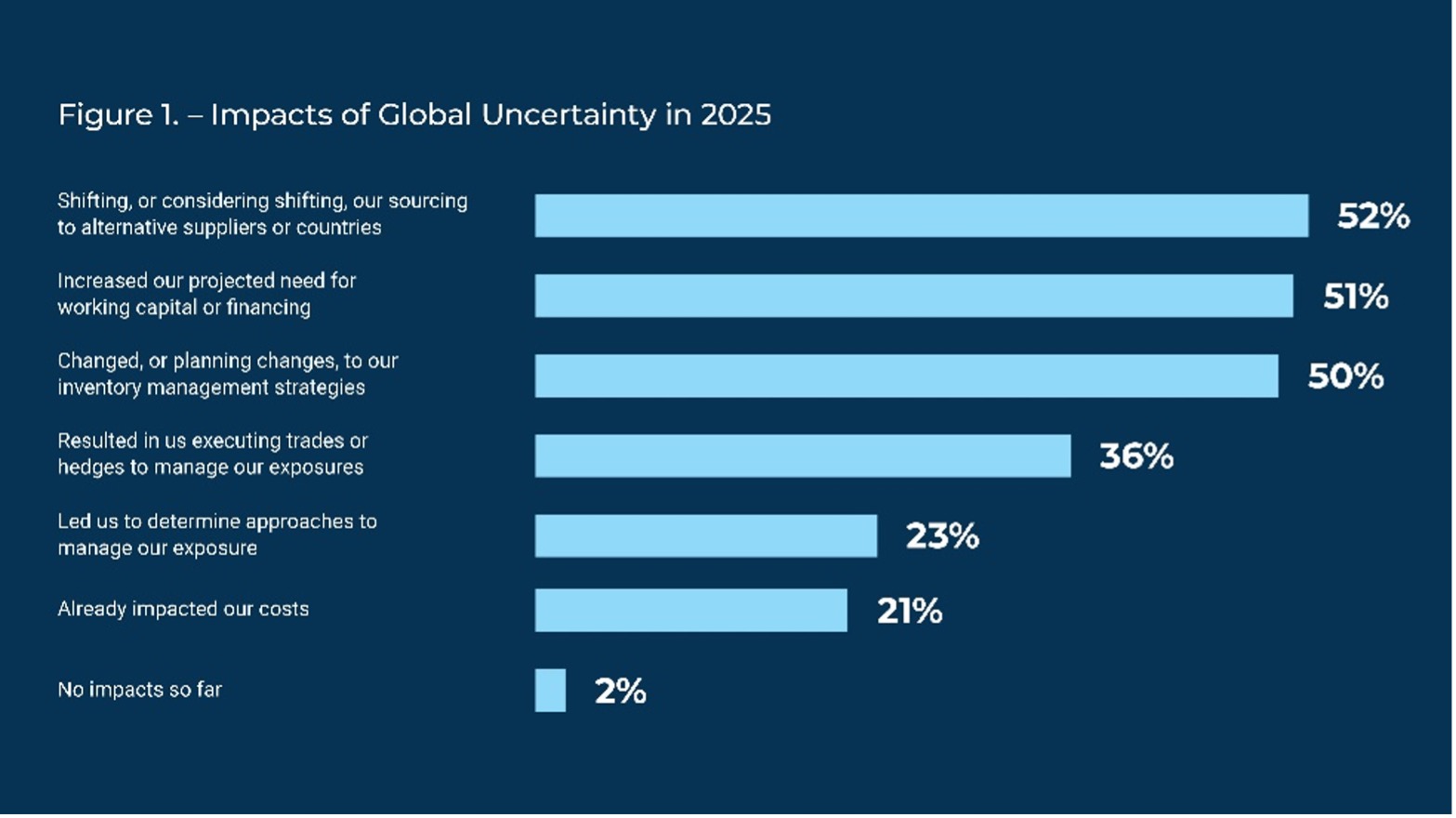
Given the large amount and complexity of business changes, companies are changing how they identify and manage risk exposures, develop supply chain strategies, and address increasing costs. Long gone are the days of departments relying on paper reports and stale intelligence (see Figure 1).
Cash Management Demands Metrics
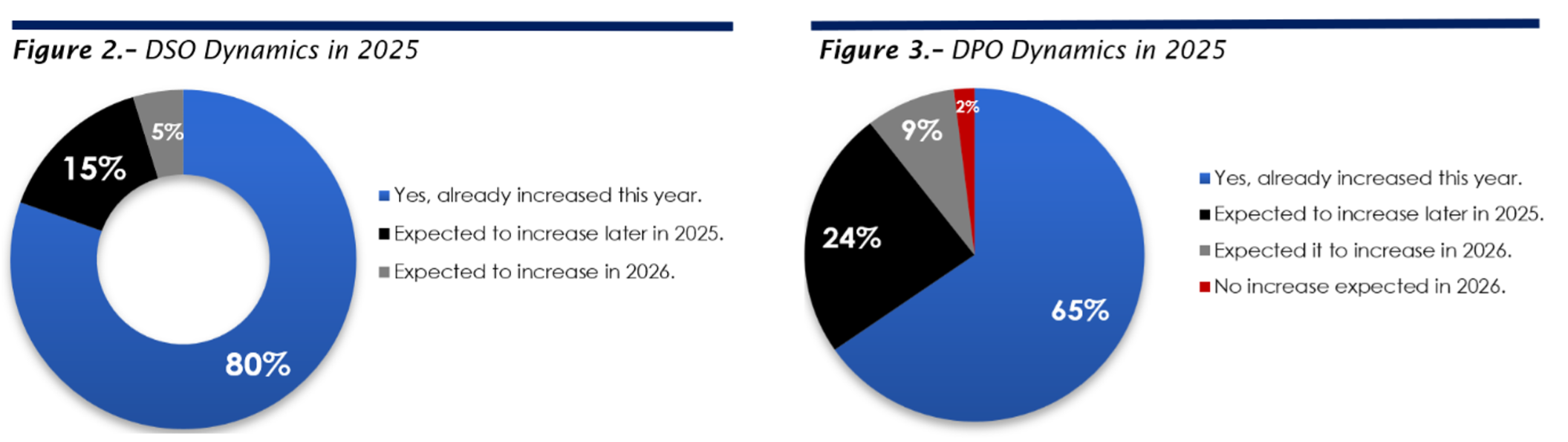
In 2025, the impacts of economic volatility on cash management included measurable increases in Days Sales Outstanding (DSO) and Days Payable Outstanding (DPO) (see Figures 2 and 3). When it comes to data output as critical as this, companies need speed, accuracy, and high-quality analysis to further advance their decision-making.
Cash Management is Leveraging AI
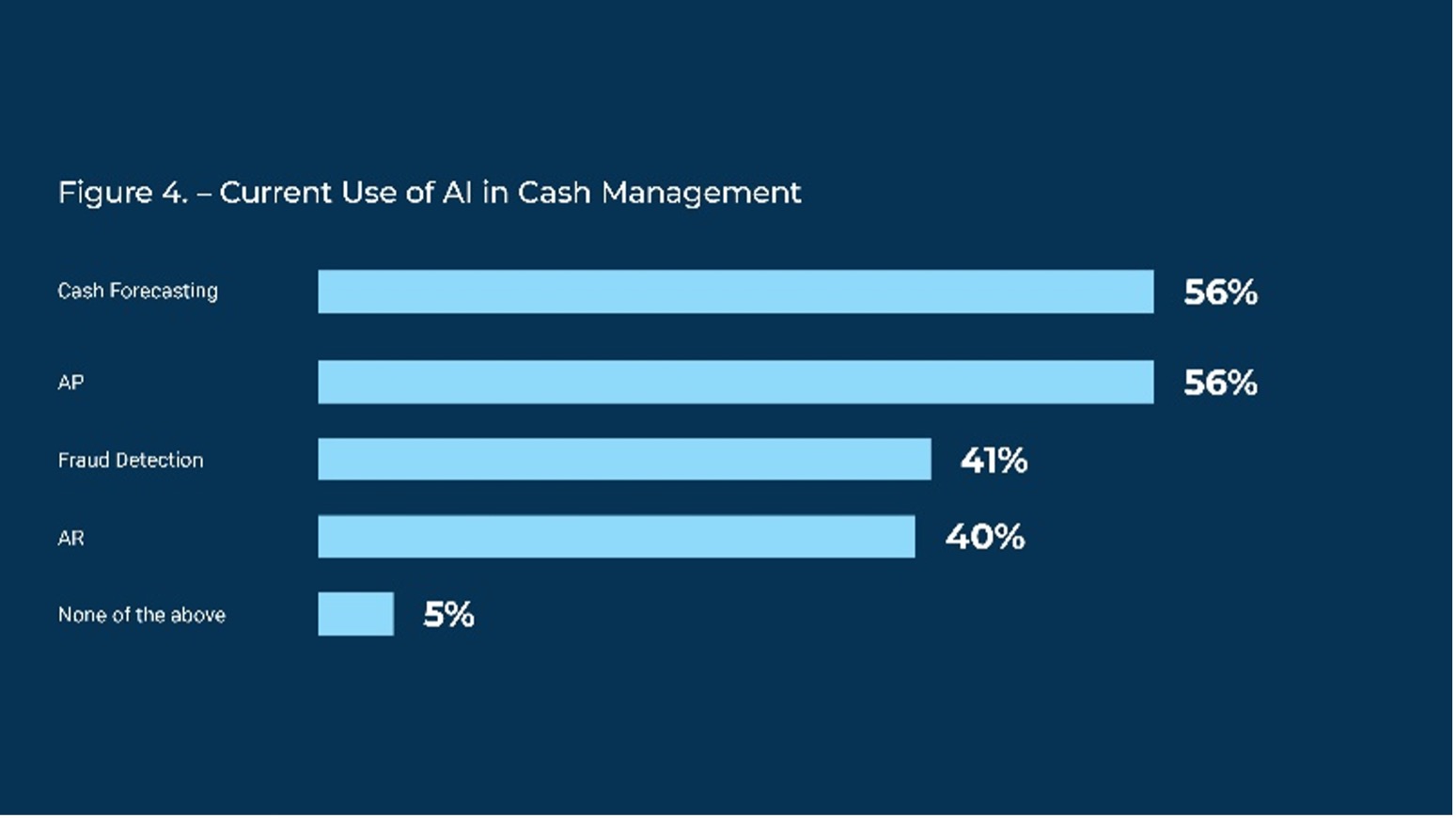
At least 40% of those surveyed are leveraging AI in cash forecasting (56%), accounts payable (56%), accounts receivable (40%), and/or fraud detection (41%) (see Figure 4). Beyond cash forecasting, this adoption aligns with treasury departments’ direct control over accounts payable (AP) and accounts receivable (AR). Cash forecasting success is built on how well cash inflows and outflows are understood and predicted, so leveraging AI for cash forecasting, AP, and AR makes sense.
AI Can Help Cash Management Mitigate Challenges
The most common challenges faced by treasury teams include a lack of visibility into bank account activity, a lack of collaboration with AP and AR colleagues, regulatory changes, and a lack of cash forecasting speed and accuracy. Investing in AI for fraud detection and AP and AR forecasting are additional ways companies can address and overcome these challenges.
Survey Highlights
- Unprecedented global market dynamics in 2025 have increased DSO and DPO across companies of all sizes and industries.
- The top cash management challenges are cash visibility, a lack of collaboration between financial teams, and unanticipated regulatory changes.
- To more effectively manage cash, treasury teams need to identify and mitigate cash management silos within their own teams, between AP and treasury, and between AR and treasury.
- AI adoption in treasury is common in several areas, including cash forecasting, fraud prevention, AP, and AR.
- The main objectives for implementing treasury-related technology in 2025 and 2026 include enhancing security and control over financial processes, improving access to important data, utilizing data insights to support decision-making, and automating manual and repetitive tasks.
- Companies are investing in their treasury teams, focusing on cash management technology upgrades, data management and analysis, and strategic business partnering.
- AI will not dilute or reduce treasury employee headcount. Companies plan to add treasury staff in 2026.
Share